Many traders seek platforms that combine expertise, competition, education, and full control over their trading decisions.
Tradeiators represents a model that brings all these elements together. It is not just a tool for executing trades—it places the trader at the heart of the decision-making process, empowering them to develop skills and compete transparently.
Below, we explore how Tradeiators provides this level of full control, and which tools and features make it possible.
What Is Tradeiators?
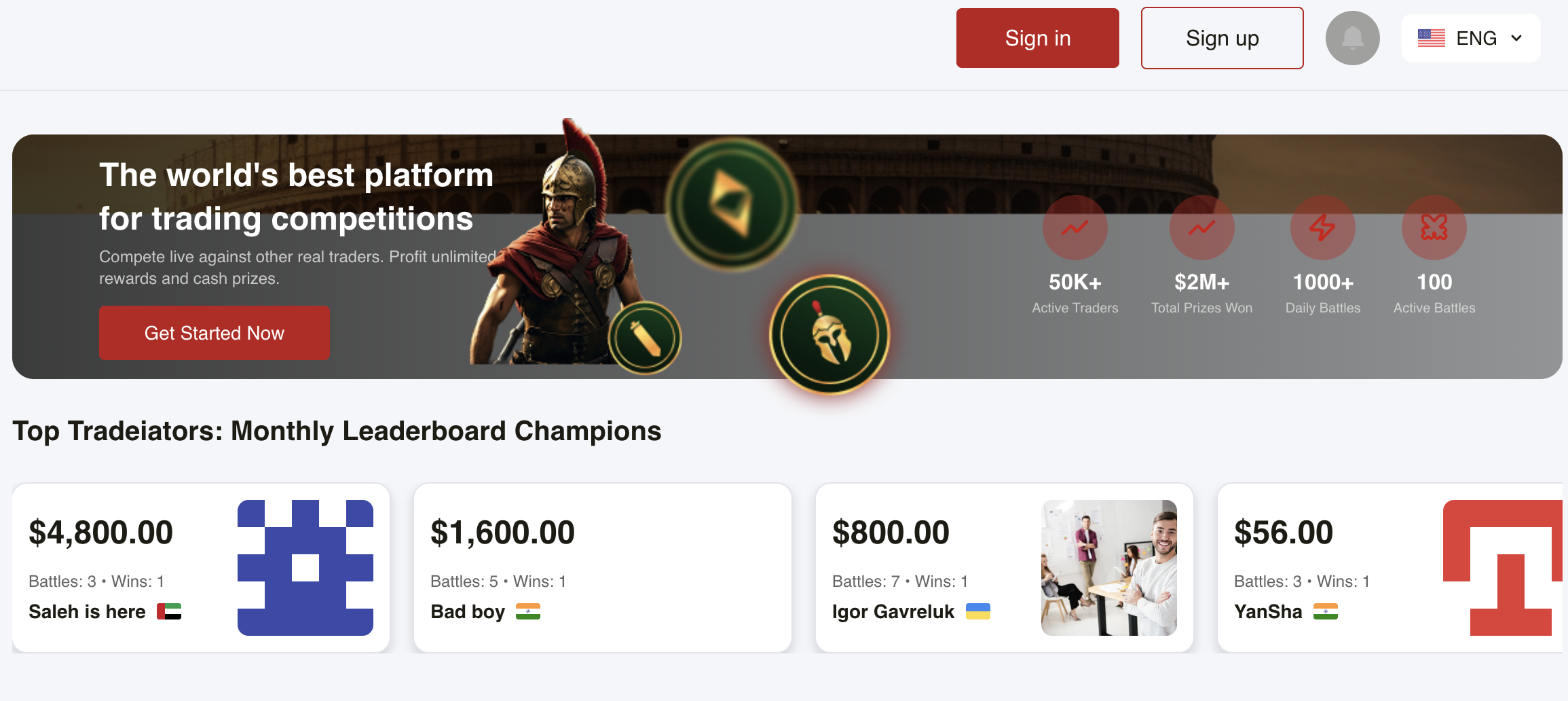
Tradeiators is a platform developed by SAL Innovations, based in Malta, specializing in providing a gamified competitive trading experience that merges trading with challenge and learning.
The platform allows traders to join daily or periodic contests, whether in demo mode or live contests, to measure their performance against others.
Its goal is not only profit, but also enhancing traders’ capabilities through analytical tools, performance assessment, and an engaging community.
How Tradeiators Gives Traders Full Control
Here are the main features that allow traders to be in full control of their trading journey:
| Feature | How It Works | How It Enhances Control |
|---|---|---|
| Live Competitive Contests | Traders can participate in real-time contests with others—friends or global participants. | The trader becomes an active participant, not just a market observer. Direct performance comparison fosters clarity and personal accountability. |
| Demo Sprints | The platform allows trading simulations without financial risk, closely mirroring live markets. | Traders can test strategies, make mistakes, and adjust without losing money—refining their approach before going live. |
| Analytics / AI Recaps | After contests, the platform provides feedback (e.g., best trades, common mistakes, suggested improvements) using data-driven analysis. | This enables traders to rely on insights instead of intuition, understanding their strengths and weaknesses for more informed decision-making. |
| Built-in Risk Management (Stop-Loss, Profit Targets, etc.) | Users can preset loss and profit limits and control trade exits. | Minimizes unexpected losses and turns trade exits into planned decisions rather than emotional reactions. |
| Community & Social Engagement | Includes chats, forums, individual and group competitions, and the ability to follow others’ performances. | Traders learn from others’ strategies, gain perspective, and continuously improve within an active community. |
| Educational & Strategic Resources | Offers guides, workshops, and materials on building winning trading strategies. | These resources help traders make calculated strategic decisions instead of random or imitative ones. |
Points to Consider: Limitations and Warnings
Even with all these advantages, traders should be aware of some important aspects:
-
Competitive Pressure Can Increase Stress
Live competition and real-time rankings may push traders into quick, less calculated decisions if they lack experience or discipline. -
Demo Mode Doesn’t Fully Reflect Reality
Despite realistic simulation, factors like liquidity differences, slippage, and transaction costs can vary in live trading. -
Rewards and Fees
Traders should understand contest entry rules, potential fees, profit calculation methods, prize structures, and withdrawal conditions. -
Personal Risk Management Is Crucial
Even with tools like stop-loss orders, trading always carries risk—only invest what you can afford to lose.
Conclusion
Tradeiators represents an advanced model in the world of competitive trading. It:
-
Empowers traders to take responsibility and control through tools for testing and evaluation.
-
Combines learning, community engagement, and real competition, helping accelerate the trader’s learning curve.
-
Offers demo entry for safe exploration before transitioning to live trading with confidence and skill.
When used wisely—with sound risk management and a well-defined strategy—Tradeiators gives traders something close to a full steering wheel: the ability to choose timing, method, risk level, and goals—rather than merely reacting to market movements.