For many years, trading was presented to the public as an individual skill:
A person sitting in front of a screen, analyzing charts, clicking buy and sell buttons, and trying to survive in a market that shows no mercy.
But that perception is changing fast.
Today, we’re witnessing a deep shift: trading is evolving from a solo activity into an organized competition — increasingly similar to esports.
And with that, we’re seeing the birth of an entirely new category:
Trading Esports, or competitive trading.
So what does that actually mean? Why is it emerging now — and what makes trading capable of becoming a competitive sport that people watch, follow, and measure like any tournament?
First: What Is Trading Esports?
Trading Esports is a competitive format in which traders (individuals or teams) are placed in a structured trading environment — live or simulated — to compete under clear rules and defined performance metrics, over a specific time period, with a leaderboard and verifiable outcomes.
The real difference isn’t trading itself — it’s the structure of competition:
- Clear entry/exit rules, safety standards, and risk management requirements
- Standardized performance measurement that goes beyond “How much did you make?” to “How did you make it?”
- Points systems and multi-round formats
- An audience, livestreams, and analytical commentary (Caster / Analyst)
- Prizes, sponsors, and a growing community of followers
In other words: trading is no longer just an individual decision — it’s becoming a competitive event that can be packaged as both media and education at the same time.
Second: Why Is This Trend Emerging Now? (And Why Didn’t It Exist 10 Years Ago?)
The rise of Trading Esports isn’t a coincidence — it’s the result of four major shifts coming together:
1) The Evolution of Trading Infrastructure
Analysis tools, execution systems, and risk management have become faster and more transparent, making real-time competition measurable and trackable.
2) The Culture of Gamification
The new generation is used to daily challenges, rankings, achievements, and competing on leaderboards.
The question is no longer: “Did you trade?”
It has become: “Where do you rank?”
3) The Rise of Finance as Entertainment
Markets have become content. Social platforms are full of live analysis clips, reactions to news, and real-time coverage of price movement.
What’s missing from this content is verification and professionalism — and that’s where competitive trading comes in.
4) The Need for a Performance Standard That Isn’t Misleading
In traditional trading, many success stories can’t be verified — or are exaggerated.
In Competitive Trading, everything is measured, documented, and compared, creating an environment that’s more credible and more engagingi led.
Third: How Do We Define a “Pro Trader” in This Space?
In esports, a professional player isn’t necessarily the one with the highest kill count — it’s the one who understands strategy, resource management, and how to read the game.
The same applies to trading.
A “pro trader” in Trading Esports isn’t simply the one with the highest profit — but the one who combines:
- Consistency
- Risk Discipline
- Adaptability
- Decision Quality (the quality of decisions, not just outcomes)
- Execution (precision and commitment to the plan)
As a result, competition reveals skills that do not appear in a single winning trade or a “profit screenshot.”
Fourth: What Makes Competitive Trading Different from Traditional Trading Contests?
Many will ask: “Weren’t there trading competitions before?”
Yes — but there’s a major difference between a contest and a competitive sport.
Traditional contests often:
- Measure profit only
- Encourage excessive risk (because the biggest risk-taker may win)
- Lack standardized integrity and fairness frameworks
- Don’t offer a story or real spectator experience
Trading Esports, however, requires competitive design that makes the “game” fair, sustainable, and watchable, such as:
- Risk-adjusted performance scoring
- Risk limits
- Scoring models that prevent “financial suicide” just to reach first place
- Multiple formats (Solo, Team, Sprint, Season)
- Oversight and governance
Fifth: What Does This Mean for the Future?
If competitive trading is coming, what happens when this category matures?
1) A “League System” for Traders Will Emerge
Just like in sports, there will be seasonal rankings, tournaments, and levels.
2) A New Content Industry Will Appear
- “Trading match” breakdowns
- Replays of key decisions
- Tactical commentary on team strategies
- Stories of star traders and rising talent
3) Trading Education Will Start to Look More Like Athletic Training
Instead of “memorize this strategy” education, training will be built around:
- Decision drills
- Behavioral development
- Performance under pressure
- Error review — like reviewing football matches
4) Demand for Fairness and Transparency Will Grow
Because competitive audiences don’t forgive ambiguity.
This will lead to:
- Clear performance standards
- Verified performance documentation tools
- Platforms built for integrity and fairness
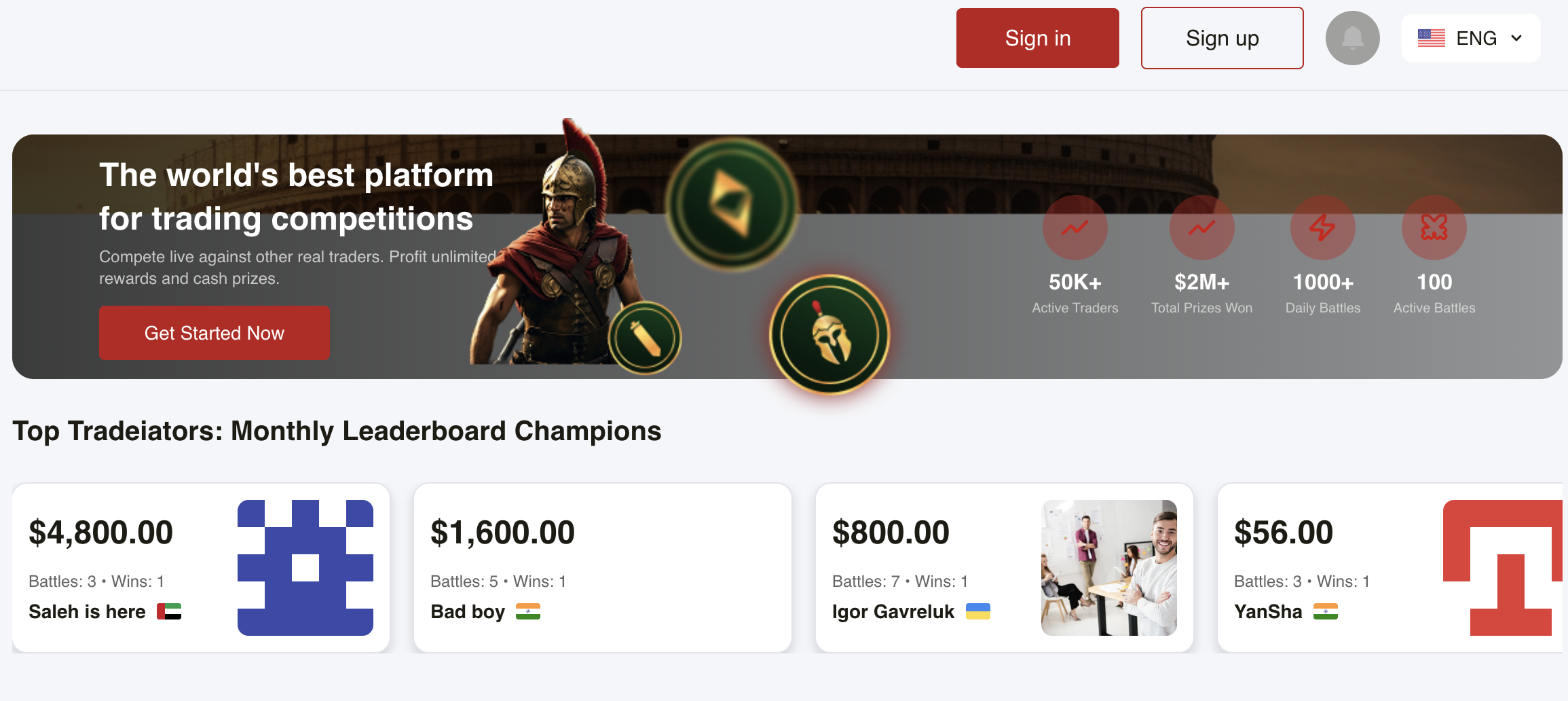
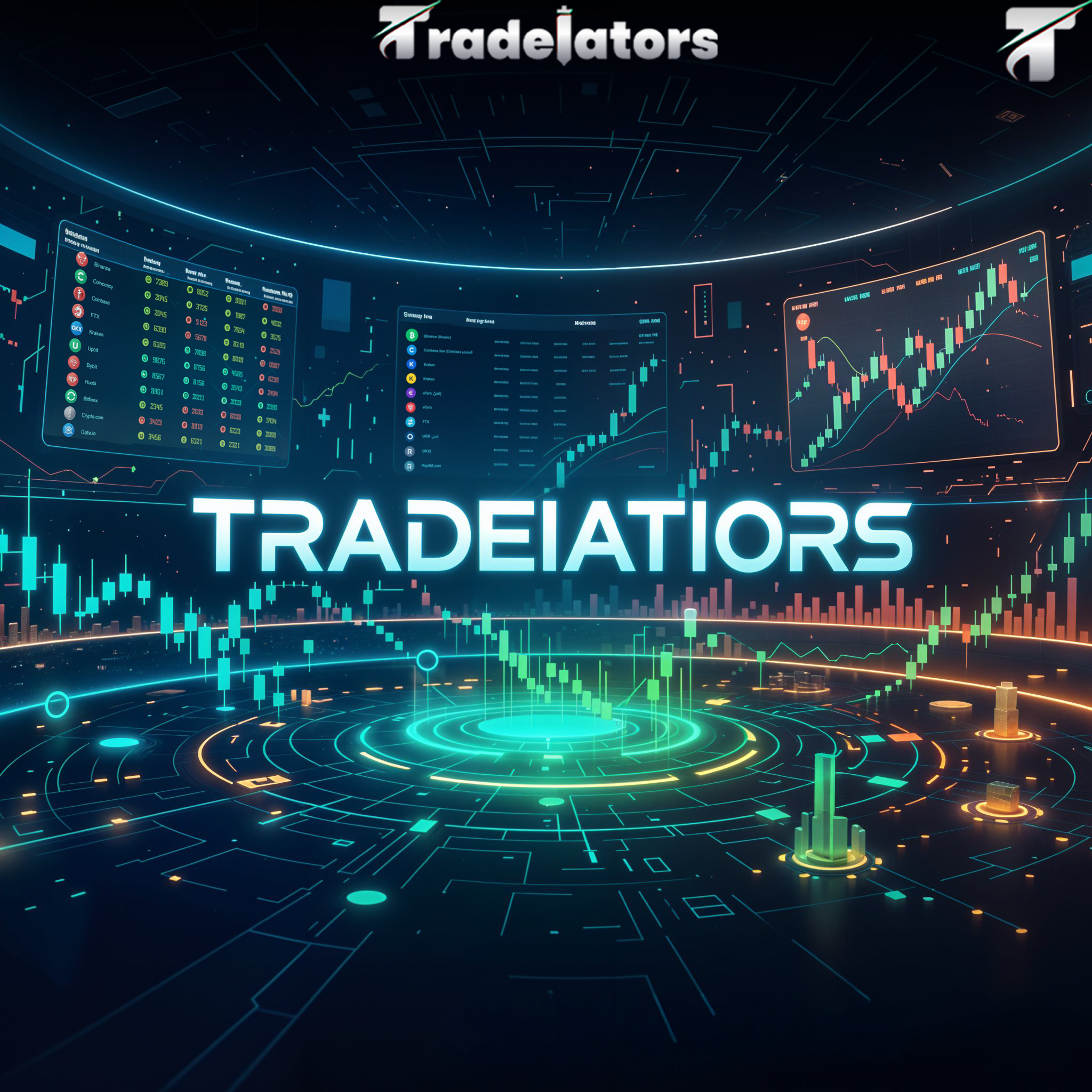
Sixth: Where Does tradeiators Stand in This Wave?
Is Trading Esports just a “trend,” or the beginning of a new industry?
We believe it’s the beginning of an industry.
Because any field that has three core ingredients can evolve into an esport:
- A measurable skill
- Standardizable competitive rules
- A story that audiences can follow
Trading already has these ingredients — but it lacked a platform that turns it into an experience.
That’s where tradeiators comes in: not only as a trading platform or community, but as a builder of this emerging category by:
- Creating a new language for competitive trading
- Designing fair performance metrics (beyond profit)
- Building competitive environments that push traders to develop honestly
- Turning performance into a story people can watch — and an achievement that can be verified
Conclusion: Trading Has Become More Than a Trade — It Has Become a Sport
It’s easy to see trading as numbers moving on a screen.
But when it becomes a fair competition — where discipline, skill, and decision-making are measured — we’re no longer watching trades.
We’re watching performance.
Trading Esports isn’t just a future idea.
It’s a redefinition of what it means to be a trader.
And just as esports created stars, communities, and an entire culture, competitive trading may become the next generation of how people engage with markets.
The question isn’t: “Will it happen?”
It’s: Who will lead this category?
If you’re a trader looking to test your skills in a fair competitive environment — or you’re curious about how this new category could reshape the future of markets — follow tradeiators.
We’re building the future of competitive trading, step by step.