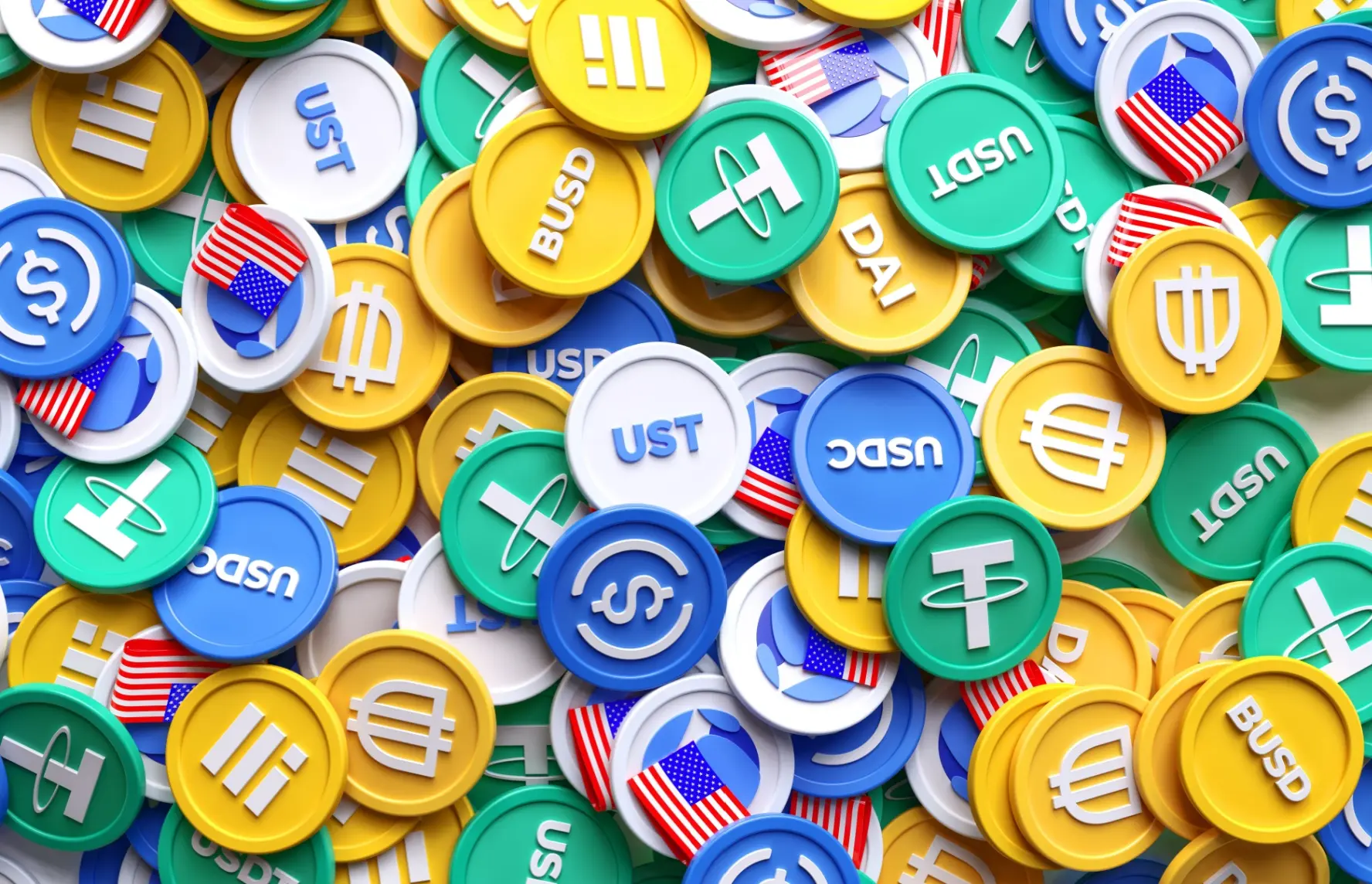
2025 witnessed a notable transformation in the stablecoin market, driven by major regulatory developments—most notably the signing of the GENIUS Act—alongside Circle’s high-profile IPO and the rise of several tokens that outpaced competitors in transaction velocity.
According to CoinGecko data as of December 15, the total supply of U.S. dollar–pegged stablecoins increased by more than $100 billion, reaching $314 billion.
However, performance was not equal across the market. Velocity was measured using a formula that compares trading volume to average supply, showing how many times each token changed hands on average throughout the year.
Tether (USDT) topped the list with a velocity of 166, benefiting from its long-standing role as a core asset in global crypto trading. Its market capitalization reached $186 billion, reflecting 35% growth since the start of the year. Most USDT activity remains concentrated on Ethereum and Tron.
In second place was Ripple USD (RLUSD), despite having a significantly smaller market cap than USDC—highlighting its strength as an efficient tool for value transfer.
Ripple also secured preliminary regulatory approvals and expanded the use of RLUSD in Singapore, including integrations within real-world asset (RWA) tokenization platforms.
USDC, meanwhile, recorded a velocity of 56 and grew its market capitalization to $78.4 billion, benefiting strongly from the new regulatory environment that boosted investor confidence—especially after Circle’s listing on the New York Stock Exchange.
The newly launched USD1—backed by a project linked to the Trump family—posted a velocity of 39 despite launching only in April. It quickly reached a $1 billion market cap, positioning itself as a highly liquid transactional stablecoin and expanding through broad partnerships and integrations.
In the following ranks came PayPal USD (PYUSD) with a velocity of 18, supported by its expansion to multiple new blockchains. USDe, issued by Ethena, recorded a velocity of 11, despite sharp volatility during the year due to its non-fiat-backed structure.
Meanwhile, USDS (the new name for DAI) posted a very low velocity of 1, as it is primarily used within DeFi lending contracts as a savings and collateral tool rather than for daily transactions.