
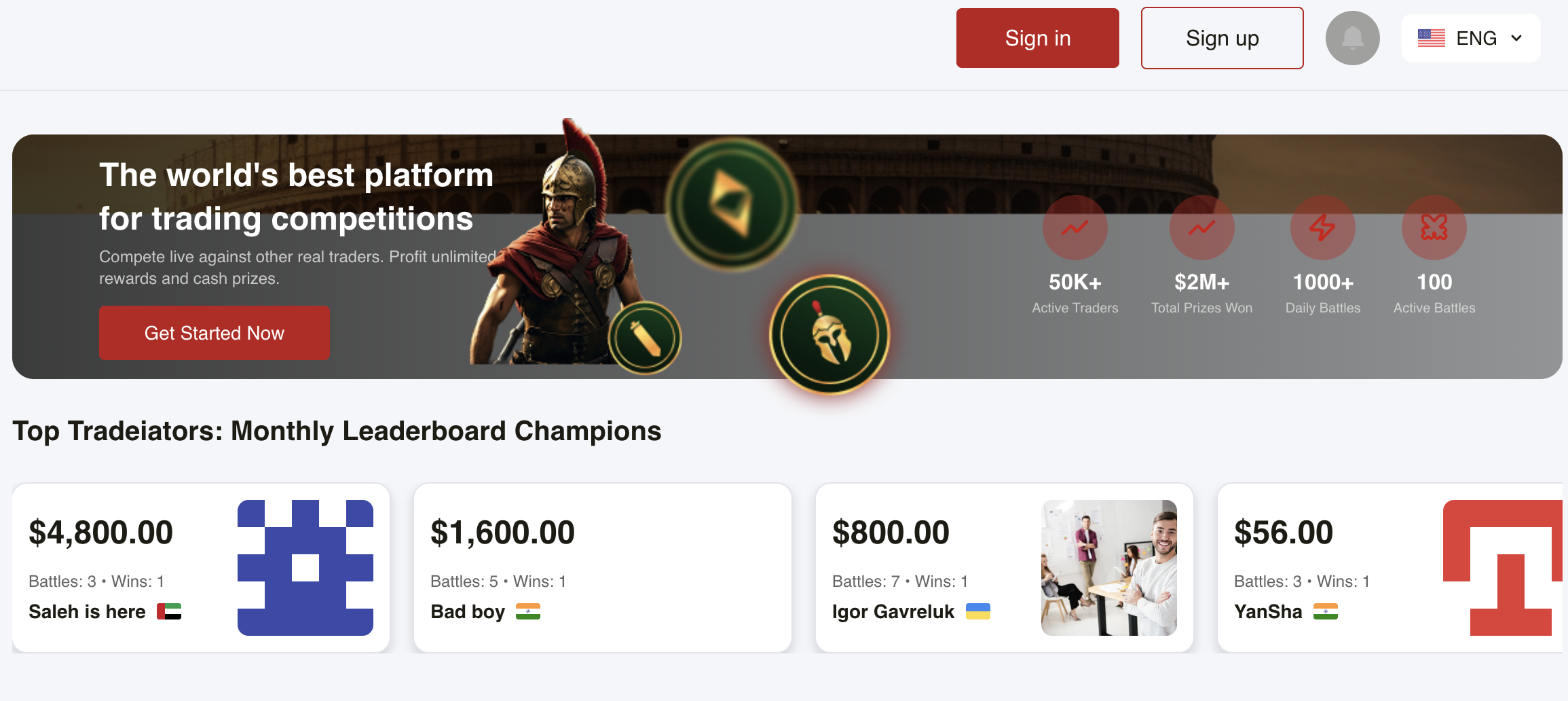
As interest in trading in financial markets continues to grow, trading competitions have become one of the most popular tools that help new traders learn and gain experience in a semi-realistic environment with limited risk.
In this guide, we will explain what trading competitions are, how they work, and why they can be an ideal starting point for beginners.
What Are Trading Competitions?
Trading competitions are organized events that allow traders to compete against each other to achieve the best trading performance within a specific time period.
These competitions are often conducted using demo accounts, and sometimes with small real-money accounts. Participants are ranked based on criteria such as:
- Profit percentage
- Risk management
- Performance consistency
- Number of successful trades
The main goal is not only to win, but also to learn and improve skills in a competitive environment.
Why Are Trading Competitions Suitable for Beginners?
1. Learning Without High Risk
Most beginner competitions use virtual funds, allowing traders to practice and make mistakes without putting real capital at risk.
2. Applying Theoretical Knowledge
Instead of only reading books or watching lessons, competitions give you the chance to apply strategies in real trading conditions that closely simulate the actual market.
3. Building Psychological Discipline
Trading isn’t just about numbers — it’s also about managing emotions such as fear and greed.
A competitive environment helps beginners understand the psychological side of trading.
4. Opportunities to Win Prizes
Some competitions offer cash prizes, funded accounts, or educational subscriptions, which adds extra motivation to stay committed and continue improving.
How Do Trading Competitions Usually Work?
Although details vary from one platform to another, most trading competitions follow these stages:
- Registration: Creating an account and agreeing to the competition terms
- Receiving a virtual balance: A fixed amount to trade with during the competition period
- Trading under clear rules: Such as maximum risk limits or allowed asset types
- Evaluation and ranking: Based on final performance
- Announcing results: And distributing prizes or certificates
Important Tips for Beginners Before Joining Their First Trading Competition
- Don’t chase quick profits: Focusing on risk management is more important than finishing in first place
- Stick to one strategy: Constant switching increases mistakes
- Trade as if it were real money: This is the best way to learn effectively
- Review your performance after every trade: Real learning comes from analysis
- Read the competition rules carefully: Some strategies may not be allowed
Common Mistakes to Avoid
- Overtrading
- Risking a large portion of the balance on a single trade
- Copying others without understanding
- Ignoring your trading plan due to competitive pressure
Are Trading Competitions Enough to Become a Professional?
Trading competitions are not a replacement for structured learning, but they are a powerful tool within a trader’s journey.
When used correctly, they can be an excellent bridge between theoretical learning and real trading.
At tradeiators, we believe that building a successful trader starts with small, thoughtful, and disciplined steps — and trading competitions are one of those steps.