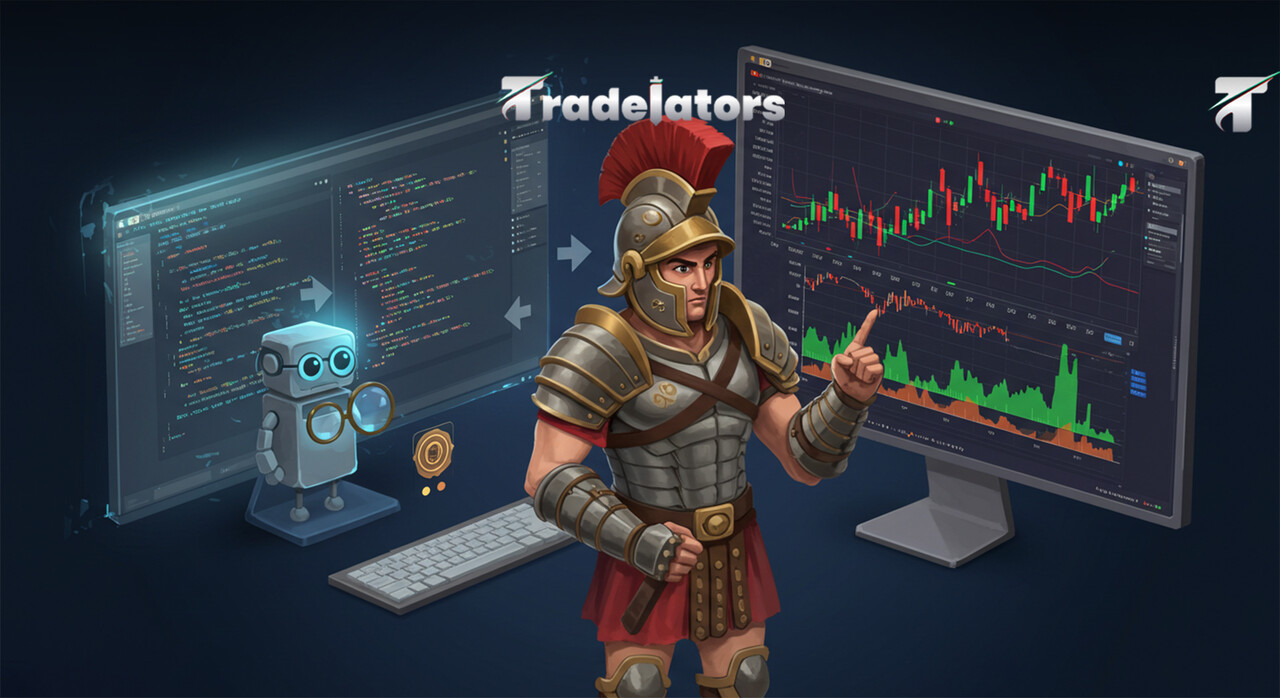
In an era increasingly dominated by trading algorithms, programming has become an essential part of every professional trader’s toolkit. As a result, there’s a growing need for platforms that offer a safe and realistic environment to test Automated Trading Systems.
One common question arises:
Can a platform like Tradeiators be used to test such systems?
The short answer:
Yes – but with certain conditions and a solid understanding of how the platform and automated systems work.
What Are Automated Trading Systems?
Automated Trading Systems (ATS) are pre-programmed algorithms designed to execute trades based on specific conditions, without the need for manual intervention.
These systems can range from simple – like executing a trade when two moving averages cross – to extremely complex, incorporating multi-layered analysis, real-time news reactions, and dynamic capital management.
Before deploying these systems in a live trading environment, intensive testing is required through:
- Backtesting: Running the system on historical data to evaluate past performance.
- Forward Testing: Testing in a live-like but simulated environment.
- Live Simulation: Operating the system under real market conditions without risking actual capital.
Where Does Tradeiators Fit Into This?
Tradeiators provides a virtual trading environment based on real market data, built around short to medium-term competitive trading contests.
Although primarily designed to enhance manual trading skills in a realistic and risk-free setting, the platform also offers an excellent environment for testing practical aspects of automated trading systems—particularly during the semi-live testing phase.
When Is Tradeiators Suitable for Testing Automated Systems?
Here are some scenarios where the platform can be effectively leveraged:
1. Testing a Manual Strategy Before Automating It
Before writing your first line of EA (Expert Advisor) or bot code, Tradeiators helps you verify your strategy’s effectiveness manually:
- Does it actually work in a competitive, real-world setting?
- How does it handle market volatility?
- Can it deliver consistent results?
Manually evaluating the strategy first is the best way to avoid coding a system based on flawed assumptions.
2. Simulating System Rules Within the Contest Framework
If you have an automated system that’s currently semi-manual, you can rigorously apply its rules during competitions.
For example:
- Entering trades only when specific conditions are met
- Setting stop loss and take profit based on technical models
- Avoiding trades during high-impact news events
- Trading during specific market hours only
This method allows you to test the system’s discipline and robustness under time constraints and competitive pressure.
When Is Tradeiators Not Suitable for Full Automation Testing?
It’s important to note that in its current form, Tradeiators does not support direct integration with automated systems (e.g., MetaTrader EAs or API-based bots). Therefore, it’s not a plug-and-play testing environment for execution-ready robots.
However, it is:
- An ideal platform for manually testing a system’s rules and strategies
- A smart environment to evaluate the core idea’s effectiveness before investing in full development
- A great tool for comparing your system’s behavior against real competitors in a market-like scenario
Bottom Line: Is Tradeiators Useful for System Testing?
Absolutely. Tradeiators is a valuable tool in the pre-coding stage of automated system development. It offers a real-data-based, competitive environment to assess a system’s viability before turning it into executable code.
You can monitor how your system – or its logic – responds to real-time market changes and pressure.
If you’re a system developer or planning to explore the world of automated trading, start here:
Test your idea on Tradeiators, refine it, prove it works, and then start coding with confidence.
Register on Tradeiators today, and use the platform’s intelligent environment as your first practical step in building a successful trading system.