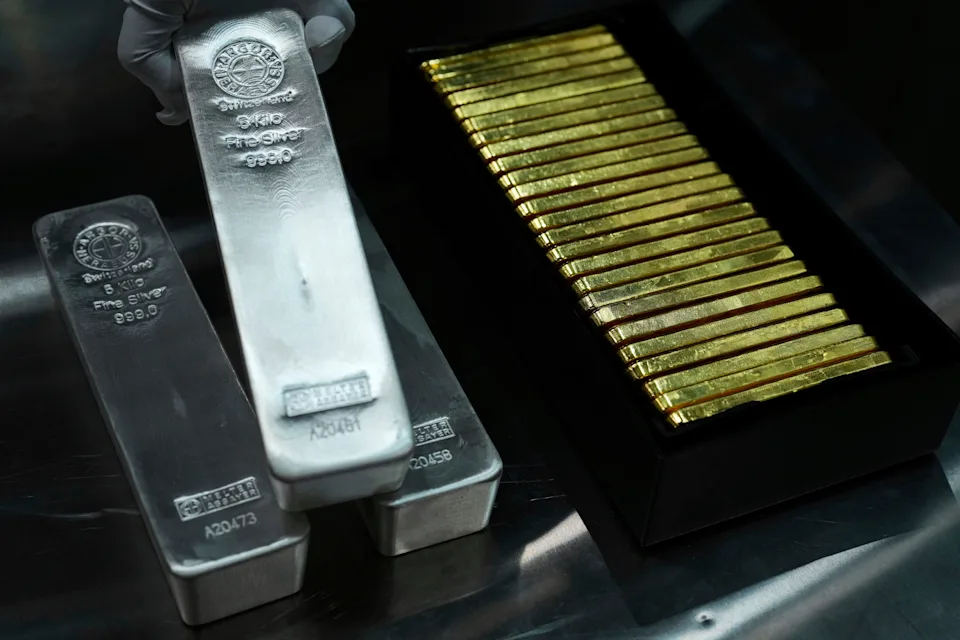
Gold and silver prices rose again this week following a sharp sell-off, reviving optimism that the historic rally in precious metals still has room to run.
Gold futures gained less than 1% to trade around $4,362 per ounce, while silver futures jumped about 8% after posting their biggest daily drop since 2021.
This rebound comes as both metals are on track to record their largest annual gains since 1979.
Meanwhile, platinum and copper are also trading near record levels, supported by accelerating demand tied to the global AI race and efforts to localize supply chains.
In this context, Josh Phair, founder and CEO of Scottsdale Mint, described the situation as a “metals war,” pointing to growing competition among countries to secure strategic resources.
Phair explained that the rush to secure metal supplies began with gold, with central bank purchases helping push prices up about 68% year-to-date, following a 27% gain last year.
He added that silver and copper have received additional support in recent months after being added to the US list of critical minerals, as they are considered essential to the economy and national security.
He also noted that the rapid expansion of data center construction in the United States is significantly boosting demand for silver, as it is a key component in this infrastructure—making its availability a crucial factor in maintaining the country’s competitiveness.
On the other hand, concerns over supply pressure are growing amid expectations that China— the world’s third-largest silver producer—will impose restrictions on silver exports starting January 1, potentially worsening the risk of a global supply shortage.
Data reflects the rising role of industrial demand for silver, with around 60% of global production used in applications such as solar panels, data center components, and electric vehicle batteries.
The report also pointed to a deal signed by Samsung in October worth $7 million to secure future silver supplies from a Mexican mine, underscoring intensifying competition for the metal.
Despite warnings from some analysts that current prices may be overstretched, Phair believes silver remains undervalued when adjusted for inflation. He noted that silver’s previous peak of $50 in 1980 would be worth more than $200 today in real terms—meaning, in his view, current price levels are still far below that inflation-adjusted high.
Monetary conditions have also supported the bullish trend in metals this year, as the US dollar has fallen by around 10%, while the Federal Reserve cut interest rates three times in 2025.