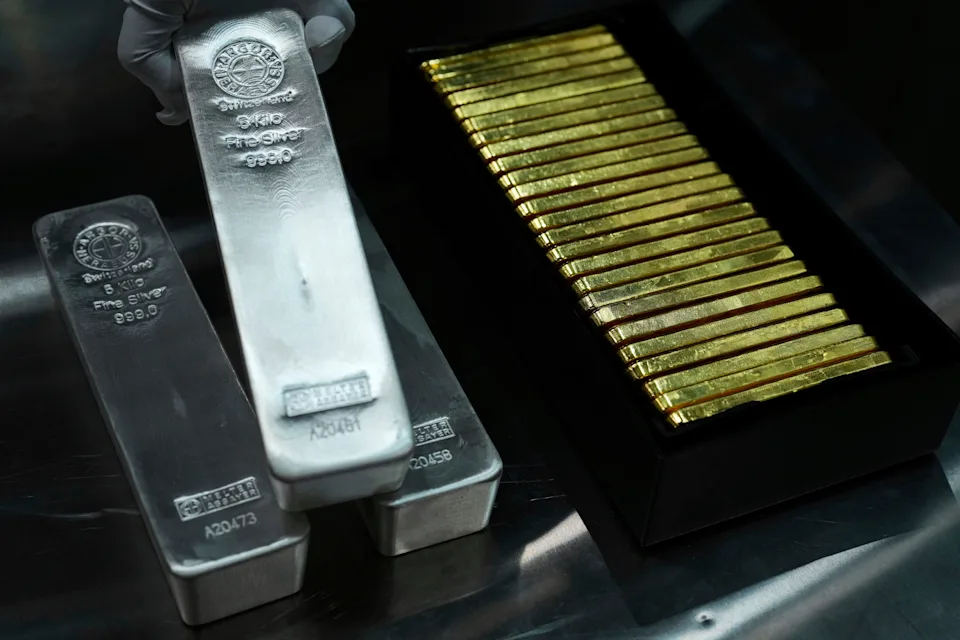
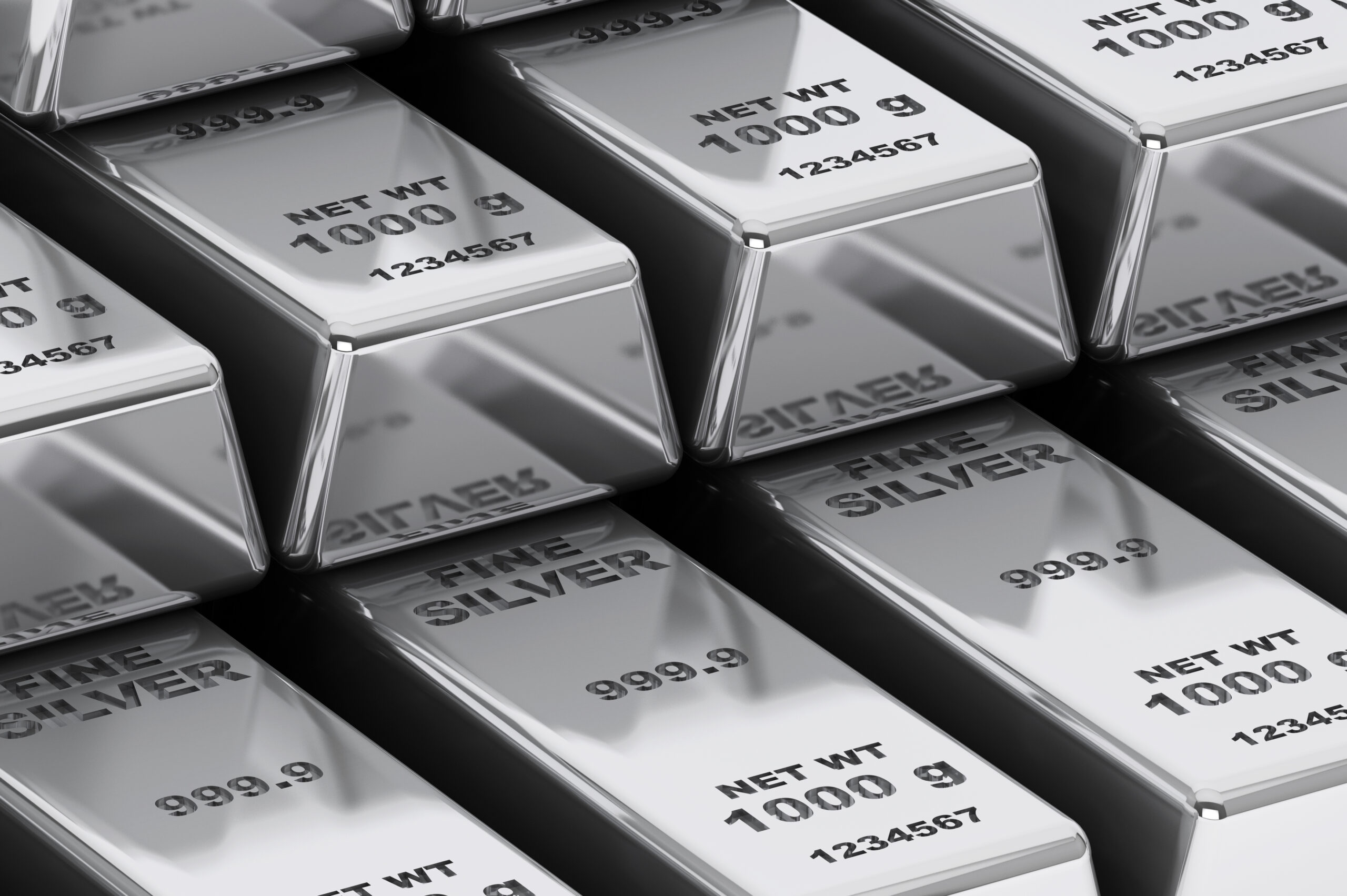
Silver — often referred to as the “Devil’s metal” due to its sharp volatility — continues to break historical records throughout 2025, driven by a severe supply crunch and an unprecedented surge in global demand.
While gold races toward new all-time highs, surpassing $4,000 per ounce, silver is following the same path but with even greater intensity, making it one of the most talked-about assets in global markets today.
A Historic Rally… Despite a Shrinking Supply
In mid-October, silver prices hit a record $54.47 per ounce, marking a 71% year-on-year increase.
Despite brief pullbacks, the metal quickly resumed its upward trajectory, fueled by strong demand and limited supply.
Paul Syms, Head of EMEA ETF Fixed Income and Commodity Product Management at Invesco, revealed that the shortage became so acute that some firms had to ship silver by air rather than by sea to meet urgent delivery needs — a clear sign of intense market pressure.
Syms added that today’s market dynamics are “different from previous cycles,” suggesting that elevated prices could persist for an extended period and potentially rise further.
The Third Major Price Peak in Half a Century
October marked the third-highest silver peak in the last 50 years, following:
- January 1980 – when the Hunt brothers attempted to corner the silver market.
- 2011 – during the U.S. debt-ceiling crisis, which pushed investors into safe-haven metals.
This time, however, the rally isn’t purely speculative. Instead, it’s driven by a powerful blend of:
- reduced global supply
- massive demand from India
- industrial consumption
- and tariff-related pressures
India: The World’s Largest Silver Consumer
India consumes roughly 4,000 tons of silver annually across:
- jewelry
- household items
- ornaments and religious ceremonies
With the end of the monsoon and harvest seasons, farmers traditionally increase their purchases of precious metals — especially gold and silver — as preferred savings instruments outside the banking system.
This seasonal demand aligned with Diwali, India’s largest religious and economic festival, pushing silver consumption to new heights.
On October 17, silver prices in India hit 170,415 rupees per kilogram, an 85% increase since the start of the year.
A Deepening Global Supply Crisis
Although the UAE and China have increased their shipments to India, the UK remains its primary supplier. However, London’s vaults have been rapidly depleting:
- June 2022: 31,023 tons
- March 2025: 22,126 tons — the lowest in years
Rona O’Connell from StoneX noted that the situation reached a point where “there was essentially no available metal left in London.”
The supply squeeze became so severe that traders were forced to pay overnight borrowing rates exceeding 200% annually — highlighting the structural stress gripping the market.
According to the World Silver Survey 2025, global silver mine production has been falling steadily for a decade, especially in Central and South America.
Meanwhile, market surplus has turned into a clear deficit due to three major drivers:
1. The Accelerating Shift Toward Electric Vehicles (EVs)
Each EV contains approximately:
- 25 grams of silver in standard models
- 50 grams in larger vehicles
With the move toward solid-state batteries, silver usage could rise to 1 kilogram per vehicle.
2. The Artificial Intelligence (AI) Boom
High-performance processors and massive data centers require metals with superior conductivity — and silver is the most conductive metal in the world.
3. Solar Energy and Photovoltaic Technology
Silver is an essential component of photovoltaic cells.
As renewable energy projects expand globally, silver demand continues to soar.
Silver: A Bridge Between Industry and Safe-Haven Assets
Silver is uniquely positioned as both a precious metal and an indispensable industrial material.
With the ongoing expansion of electrification, digitalization, solar energy, and AI technologies, silver stands to benefit from multiple structural trends simultaneously.
Syms describes this dual nature by saying:
“Silver bridges the gap between precious and industrial metals. With advances in solar and battery technologies, its applications are set to grow in an increasingly electrified world.”