
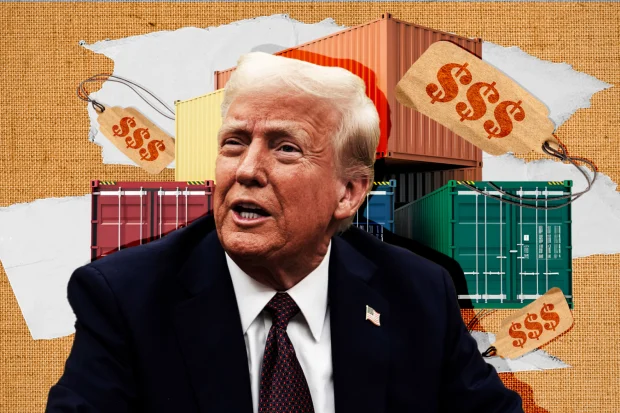
As the trade war initiated by U.S. President Donald Trump enters its eighth month, the economic community had hoped for greater clarity regarding its direction.
Instead, the situation has become even more uncertain and chaotic, especially in light of recent legal developments that threaten to dismantle the legal foundation upon which the Trump administration based its tariff measures.
On Friday, a federal appeals court ruled that the vast majority of tariffs imposed by Trump to date are unlawful. While this decision was not unexpected among international trade experts, it leaves American importers facing heightened instability that could impact the economy well into 2026.
The court invalidated Trump’s use of the International Emergency Economic Powers Act (IEEPA) of 1977 as a legal basis to impose tariffs under what the administration described as “national emergencies.” This ruling echoes a previous decision issued by a lower court on May 28, paving the way for the case to be taken up by the Supreme Court, where both the outcome and timeline remain unclear.
Throughout this year, Trump has invoked so-called “national emergencies” in dozens of instances to justify broad tariff actions. However, the IEEPA does not explicitly authorize the President to impose taxes or duties—powers that traditionally reside with Congress.
The appeals court further emphasized that the existing trade deficit, often cited by the administration as justification, does not constitute a legal state of emergency—bolstering the stance of critics who oppose Trump’s trade policy approach.
According to data from the Tax Foundation, approximately 78% of the new tariffs paid by U.S. importers fall under the “emergency tariffs” category invoked through this statute. Should the Supreme Court issue a definitive ruling invalidating them, Trump would be forced to reconsider his strategy for restructuring the global trade system.
These tariffs have been applied to imports from nearly every major trade partner, ranging between 10% and 50%, with the most notable increases targeting goods from China—America’s second-largest source of imports. Some tariff rates on Chinese goods have risen by more than 30 percentage points.
Trump has leveraged these tariffs to negotiate bilateral trade agreements, aiming to fix rates and secure better conditions for U.S. exporters. However, such efforts could become legally void if the Supreme Court overturns the emergency tariff authority.
Additionally, Trump has used tariffs as a geopolitical pressure tool. Recently, he imposed 50% tariffs on Indian imports to compel New Delhi to halt its purchases of Russian oil. A similar 50% tariff was placed on Brazilian imports, partially aimed at influencing the legal proceedings against former Brazilian President Jair Bolsonaro.
If the emergency tariff powers are rescinded, the Trump administration would lose a key lever of pressure, complicating its ability to influence the foreign and trade policy of other nations—further clouding the future of America’s ongoing trade war.