
Could this be the third time gold breaks the cycle?
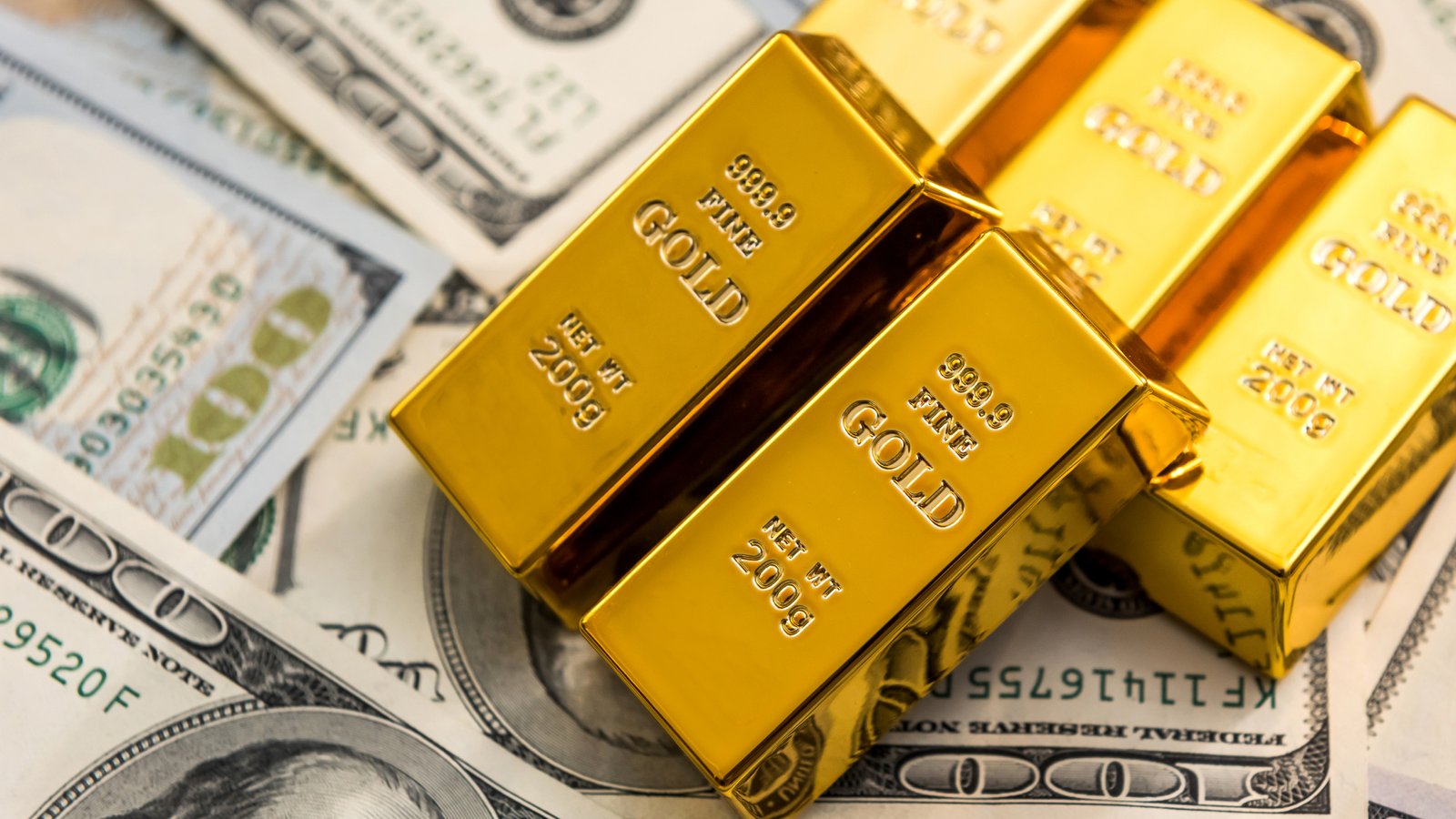
The yellow metal is experiencing a powerful rally—its third major surge in the past 50 years. However, the two previous rallies ended in painful losses for investors.
The prevailing narrative now is that “this time is different”—a phrase long considered dangerous in financial markets.
Popularized by economists Carmen Reinhart and Kenneth Rogoff in their renowned book “This Time Is Different: Eight Centuries of Financial Folly”, the phrase warns against overconfidence during repeated asset cycles.
Gold is traditionally seen as a safe haven—protected from government interference and monetary policy fluctuations. In the midst of ongoing geopolitical and financial turbulence, its price has doubled over the past two years.
Yet, this surge is not without signs of excessive speculation—often a precursor to asset bubbles.
Historically, gold experienced similar rallies, notably during 1979–1980 and 2010–2011, driven by investor fears of U.S. dollar devaluation amid what was perceived as Federal Reserve leniency toward inflation.
In both instances, those fears ultimately proved overstated. Gold prices fell significantly afterward, and the inflation-adjusted peak from 1980 was only recently surpassed.
Today’s market dynamics are prompting some to believe this time could indeed be different, supported by several structural shifts:
-
Geopolitical realignment, triggered by the freezing of Russian reserves, has led central banks in developing countries to question the safety of their holdings in Western financial systems.
-
Rising concerns over the Federal Reserve’s independence, ballooning U.S. government debt, and the potential for inflation to be used as a tool to reduce debt burdens.
Still, these same concerns were present in previous cycles—and those too ended with steep declines.
In 1980, Paul Volcker successfully crushed inflation through aggressive monetary tightening, despite triggering a double-dip recession. More recently, ultra-low and even negative interest rates in much of the world failed to generate the anticipated inflationary spiral.
Sebastien Lyon, founder and Chief Investment Officer at Troy Asset Management—a firm that holds physical gold as part of its strategy—acknowledges that the return of a “Volcker-like” figure could undermine gold’s gains. However, he doesn’t expect a hawkish pivot from Jerome Powell, and remains bullish on gold long-term, with over 10% of his assets allocated to it.
Long-Term Tailwinds… But Short-Term Caution
The Long-Term View:
At the heart of the gold thesis lies what’s known as the “devaluation trade”—the idea that heavily indebted and politically constrained governments will eventually choose inflation over austerity.
Gold acts as insurance against a prolonged period of artificially low interest rates.
But the cost of that insurance—gold’s price—has risen sharply.
So the question is: Has the risk truly increased this quickly? Or are we simply witnessing speculative momentum fueled by self-reinforcing expectations?
The Short-Term Picture:
Near-term signals are less convincing.
Gold spiked after Jerome Powell’s speech at Jackson Hole, which hinted at a shift in the Federal Reserve’s focus—from inflation targeting to prioritizing employment.
Markets interpreted this as a signal for future rate cuts—a traditional catalyst for gold prices. Since that speech, gold is up 28%.
However, broader market behavior doesn’t indicate widespread inflation fear.
The U.S. dollar has stabilized after a sharp sell-off. The S&P 500 rose, but gains were concentrated in large-cap tech stocks driven by AI optimism, while many other sectors lagged or declined.
Meanwhile, riskier assets have outperformed. The ARK Innovation ETF is up 18%, and the Russell Microcap Index has gained 13%. Conversely, the MSCI Barra Low Volatility Index is down 3%—a clear signal that investor appetite for risk is back.
A Bubble Forming?
Gold’s share of global investment portfolios has jumped from 4% to 6% in just two years—the highest level since 1986, according to Goldman Sachs strategists. At its peak during the inflation crisis of 1980, gold reached 22% of global portfolio allocations.
While the current gold rally may be underpinned by solid fundamentals, the underlying assumption remains that voters and politicians still prefer spending cuts or tax hikes over accepting entrenched inflation.
But if that balance ever truly shifts, it could reshape the global investment landscape—and gold might once again become a dominant asset class in institutional portfolios.